When Replacement Fails
On the Mechanism Societies Use to Survive Rupture, and Why the Conditions Are Disappearing

In the last post, I described what a stable container looks like. The structural conditions that make ordinary life possible. I traced several historical examples of societies that found their footing after serious rupture. And then I admitted, plainly, that I didn’t know whether we could replicate those conditions. I named it as a gap. I said I wanted to take the question seriously rather than answer it too quickly.
I have been sitting with that gap.
What I want to do now is look more carefully at the mechanism itself. The way in which societies have historically moved from broken containers to functional ones. Because when you look closely at that mechanism, something becomes visible that most current discourse, political, psychological, historical, hasn’t yet identified clearly.
The container isn’t just failing. The process by which containers have always been replaced when they do fail may be failing too.
That is a different problem than most of us are prepared for.
Institutions don’t repair themselves. Not really. Not at the level of genuine rupture. What happens historically is that failing legitimacy structures become replaced by new ones that emerge from outside the old order. The old container doesn’t get fixed. It gets superseded.
In current conversations about democratic decline and institutional failure, we discuss repair. We debate what reform should look like, which leaders might execute it, which policies might stabilize things. But repair has almost never been the mechanism of real change. Not at the level of crisis we are actually inside.
When the Western Roman Empire collapsed, it did not reform its way back to coherence. The administrative, legal, and social functions that Rome had provided didn’t disappear. They migrated. The Catholic Church absorbed them. Canon law replaced Roman civil law across large portions of Europe. The diocese mapped onto old Roman administrative regions. The Church didn’t repair Rome. It replaced what Rome could no longer hold, and it did so by building an entirely new legitimacy structure on top of the rubble.
The Reformation tells a similar story at a different scale. Medieval Catholicism wasn’t reformed from within, at least not in the ways that mattered structurally. Print technology created the conditions for an entirely new legitimacy structure to emerge. Luther’s theses spread not because the Church allowed debate but because the printing press made containment impossible. New institutions, new theological frameworks, new civic arrangements grew up outside the existing order and eventually displaced it. The process took decades and involved enormous violence. But the mechanism was replacement, not repair.
The twentieth century follows the same logic. The interwar period’s instability was not resolved by reforming the institutions that had failed. It was resolved, at catastrophic human cost, by their destruction and the construction of new international architecture afterward. The UN, Bretton Woods, NATO, the Marshall Plan: none of these were repairs. They were replacements, built by people who had watched the old order fail completely and were attempting, with genuine urgency, to construct something that might hold better.
Beneath the surface differences, the mechanism is consistent. Old order loses legitimacy. Crisis follows. New legitimacy structures emerge from outside the old one, develop enough internal coherence to become load-bearing, and eventually displace what could no longer hold.
That mechanism has a precondition.
It needs time outside of mass visibility. An incubation period. For a new legitimacy structure to emerge, it needs something easy to overlook because it feels passive. The ability to develop, to fail privately, to refine itself, to build genuine internal coherence before it faces the pressure of full public exposure.
The early Christian communities that would eventually become the institutional Church spent roughly three centuries as a minority movement operating largely outside the centers of Roman power. They developed theology, community structures, and internal governance in relative obscurity. By the time Constantine made Christianity the empire’s official religion, there was already something there. Something with enough internal architecture to absorb the weight of institutional responsibility.
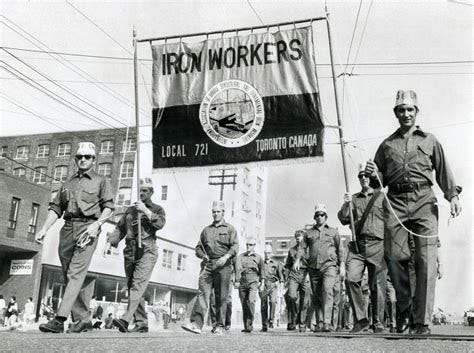
The labor movement that reshaped Western democracies in the late nineteenth and early twentieth centuries organized for decades in factories, union halls, and neighborhoods before it became powerful enough to threaten existing arrangements. That organizing happened largely outside mass visibility. It was local, slow, and cumulative. By the time it became a political force capable of producing the New Deal or European social democracy, it had developed genuine institutional depth.
The civil rights movement built for decades before the period most people think of as the movement. The NAACP was founded in 1909. The legal strategy that produced Brown v. Board of Education began in the 1930s, when Charles Hamilton Houston and Thurgood Marshall started building a careful, largely unpublicized litigation campaign through the federal courts. The church networks and civic organizations that made the 1955 Montgomery Bus Boycott possible had been building social infrastructure for years, some of them for decades. The Women’s Political Council had been lobbying on bus conditions in Montgomery since 1946. What looked like a sudden uprising was the visible surface of an enormous amount of invisible work that had been allowed to mature outside the full glare of national attention.

This is not incidental to how replacement works. It is the mechanism. New legitimacy structures require an incubation period. They need the ability to be wrong, to reorganize, to develop the internal trust and coherence that makes them capable of eventually bearing real weight.
And that is precisely what has become so much harder to find.
The attention economy, the system in which platforms generate revenue by capturing and holding human attention, did not just damage existing institutions. That is the part of the story most people are telling, and it is true as far as it goes. But the deeper damage is something else. It has colonized much of the space where replacement institutions would normally grow.
Think about what happened to the movements that carried the most genuine generative energy in the last fifteen years.
Occupy Wall Street emerged in 2011 with something real inside it. A critique of economic inequality that was, and has proven to be, accurate and important. It spread to hundreds of cities in weeks. That speed was celebrated as a sign of strength. It was actually the early signal of a fatal vulnerability. The main encampment lasted fifty-nine days before police cleared Zuccotti Park. The movement did not have time to develop internal governance, to resolve its disagreements about strategy, to build the institutional infrastructure that would have made it load-bearing. It was processed by the attention machine before it could become anything durable.

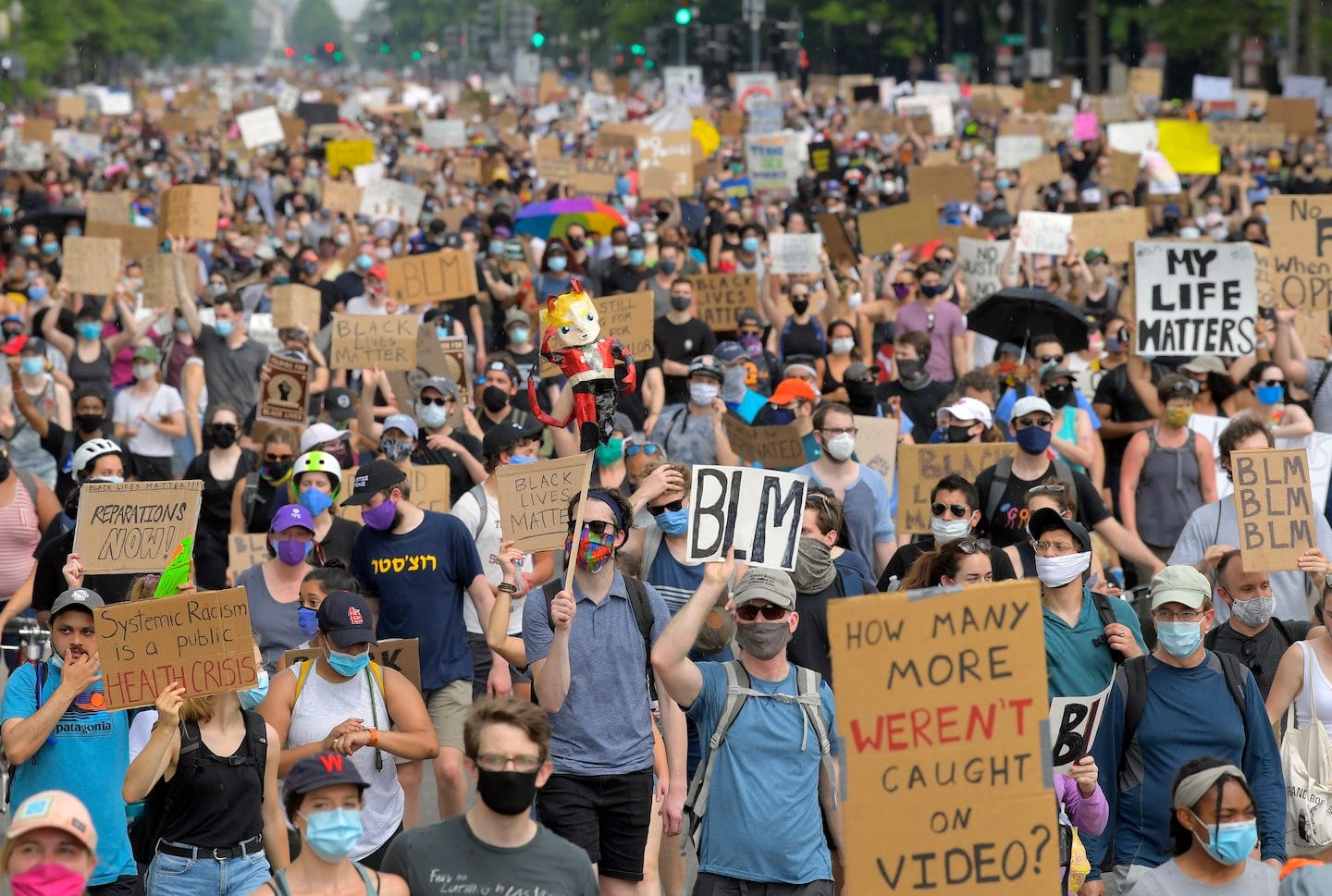
Black Lives Matter carried perhaps the most morally urgent energy of the last decade. The 2020 uprisings following George Floyd’s murder represented a genuine popular reckoning with racial violence and institutional accountability at a scale the country had not seen since the 1960s. Within weeks, the movement faced demands for policy specifics it had not yet developed, internal ideological disputes playing out in public in real time, a backlash organized with professional efficiency, and a media environment already cycling toward the next story. The infrastructure that the civil rights movement had decades to build quietly, Black Lives Matter was expected to produce in months, in full public view, under enormous pressure.
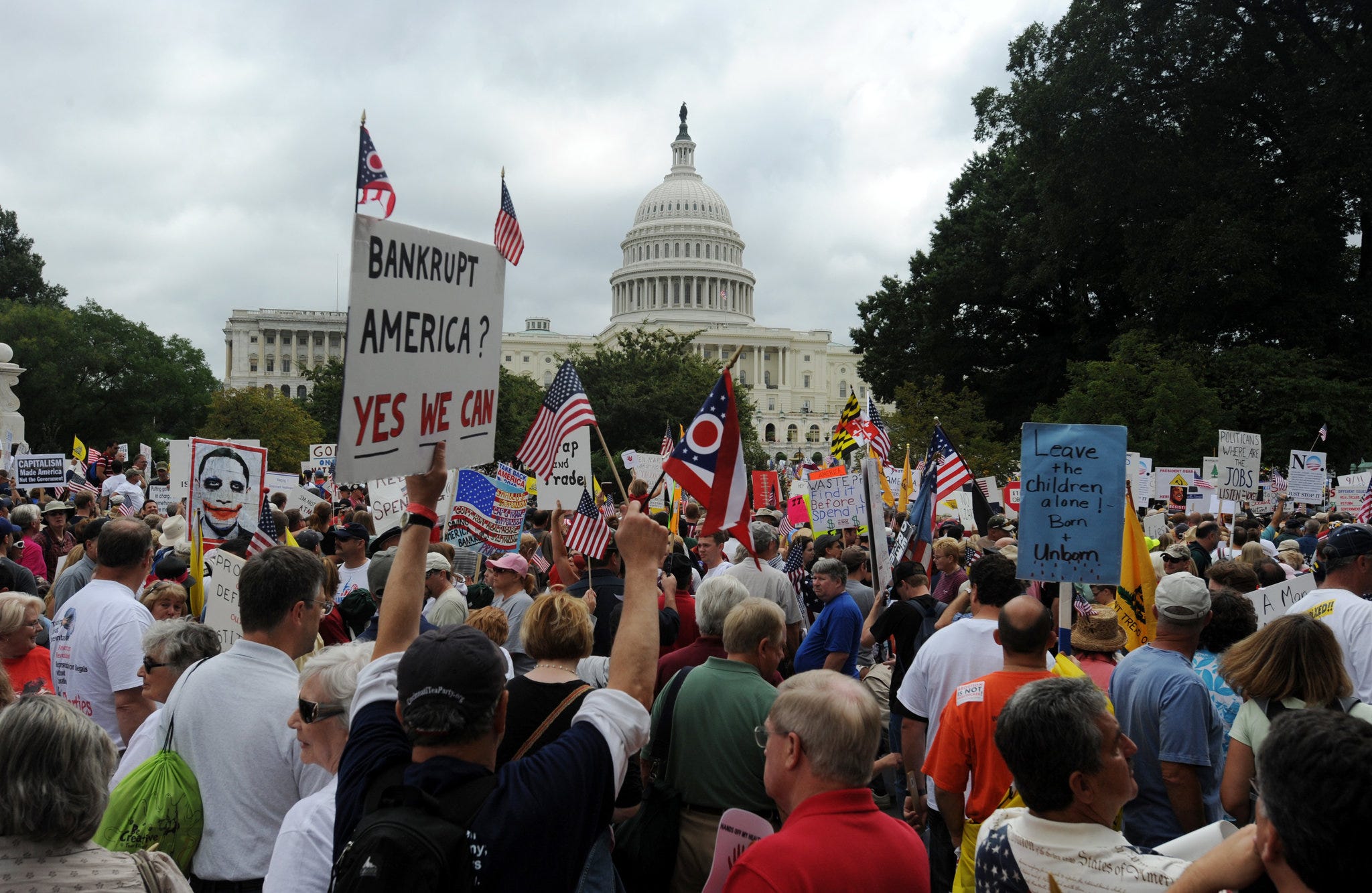
The Tea Party is worth including precisely because it came from the other direction politically, and because it complicates the argument in a useful way. It emerged in 2009 with genuine grassroots energy around fiscal conservatism and distrust of institutional power. But the donor infrastructure of Americans for Prosperity and FreedomWorks was in place before the movement publicly emerged. The capture wasn’t a later corruption of something originally pure. It was structural from the beginning. Which means the problem isn’t only overexposure. Organized money can now move faster than organized people, seeding the ground before genuine grassroots alternatives have a chance to take root independently.
These are not failures of the people involved. They are failures of conditions.
The incubation space has not disappeared entirely. The Federalist Society spent decades quietly building a conservative legal network before it became a visible force in American jurisprudence. The gun rights movement built durable institutional infrastructure largely outside mainstream media attention over many years. In different ways, both managed something like the protected development that the historical record suggests is necessary.
So the question isn’t simply whether incubation is still possible. It clearly is, under certain conditions. The harder question is which movements can still access it, and why.
Political scientist Sidney Tarrow at Cornell, whose comparative research on social movements examines the conditions under which they develop durable organizational infrastructure versus burning out quickly, has identified a consistent pattern. Movements that sustain themselves through periods of low visibility tend to have three things the attention economy specifically degrades: internal accountability structures that function without public pressure, the capacity to absorb failure without fragmenting, and leadership development that happens slowly enough to be genuine rather than performed. Those are precisely the conditions that immediate visibility destroys.
When you look at the cases where protected development succeeded recently, a pattern emerges consistent with Tarrow’s framework. They tended to have patient, organized funding behind them from the beginning. They operated within or adjacent to existing institutional structures rather than challenging them frontally. They were ideologically coherent in ways that made internal governance easier.
What the attention economy has most specifically destroyed is the incubation space for movements that are challenging existing power arrangements, that are organizationally horizontal, and that depend on broad popular legitimacy rather than elite institutional support. Those are precisely the movements that have historically done the work of genuine structural replacement. And those are the ones now most vulnerable to the cycle of overexposure, backlash, and exhaustion before they can become load-bearing.
Artificial intelligence arrived into that environment and began compressing the cycles further. Not only by accelerating the visibility problem, but by enabling the kind of coordinated, professionally organized backlash that can now be assembled faster than a nascent movement can develop the internal coherence to withstand it.
There is a version of the current moment that says we have been here before. Democratic backsliding, institutional crisis, loss of shared reality, the sense that the old order is failing without a clear successor. All of this has precedent. The argument is reassuring and partially true.
But the reassurance depends on an assumption that deserves scrutiny. It assumes the mechanism of replacement still works. That new legitimacy structures can still emerge, incubate, and eventually displace what is failing. The historical parallels are real. The mechanism they depended on may not be. At least not in the same way.
Previous periods of serious rupture had breathing room that is now much harder to find. The Reformation unfolded over decades before it faced existential pressure. The labor movement organized for a generation before it became visible enough to threaten existing power. The civil rights movement built for forty years before the period most people recognize as the movement. In each case, the breathing room was not a luxury. It was the condition that made genuine institutional development possible.
That condition is now structurally compromised for the specific kinds of movements that have historically driven replacement from below. Any movement challenging existing power arrangements with broad popular legitimacy will be immediately visible, immediately contested, immediately pulled into the polarization machine, and subject to the kind of overexposure that prevents maturation. AI is accelerating those cycles in ways we are only beginning to understand. The fragmentation of shared reality means that even when something new does begin to develop, it struggles to build the broad legitimacy that load-bearing institutions require, because there is no longer a common factual world in which that legitimacy can be established.
This is not a counsel of despair. But it is a refusal to offer false comfort.
The question most current discourse is asking is how do we repair the container. That is the wrong question, or at least an incomplete one, because repair has never really been the mechanism. The right question is whether the replacement mechanism can still function for the kinds of movements that have historically done the work of genuine structural change. And the honest answer, looking carefully at what organized money, the attention economy, and AI-accelerated fragmentation have done to that space, is that we don’t know. We have not been here before. Not exactly. Not with these specific conditions in place simultaneously.
I want to be careful here, because this argument can slide too easily into paralysis. If the replacement mechanism is compromised for movements challenging power from below, and repair was never really the mechanism, then what are we supposed to do? That is a fair question and I am not going to pretend I have a complete answer.
What I think it means, practically, is that the most important work happening right now is probably not visible. It is not trending. It is not generating the kind of immediate emotional signal that the attention economy rewards. It is slow, local, and cumulative. People building genuine trust in specific places with specific other people. Institutions small enough to actually be accountable to the people they serve. The unglamorous work of developing internal coherence before seeking external recognition.
This is not a romanticization of the local. Small institutions can fail in all the ways large ones do. But the historical record suggests that what eventually becomes load-bearing almost always begins this way. Outside the spotlight. Allowed to be imperfect. Given enough time to develop real internal architecture before it has to bear real weight.
The most dangerous thing the attention economy does is not what it does to existing institutions. It is what it does to our sense of what counts as real. If it isn’t visible, if it isn’t generating signal, if it isn’t part of the current conversation, it feels like it isn’t happening. But the things that have historically mattered most began precisely in that invisible space.
The counterexamples that complicate this argument, the movements that have managed protected development in the current environment, tend to share a common feature. They had patient, organized money behind them and operated within or adjacent to existing institutional structures. That is not a politically neutral observation. It suggests that the incubation space hasn’t disappeared equally for everyone. It has narrowed most severely for movements that depend on broad popular legitimacy rather than elite institutional support. Whether that asymmetry is a permanent feature of the current environment or a condition that can be changed is itself a political question, and not a small one.
The question worth sitting with is not whether something new can emerge. It probably can, and probably will, because the pressure generated by the failing container is real and the human need for functional structures is not going away. The question is whether it can emerge with enough protected development time, and whether the movements most capable of genuine structural replacement are the ones that can still access that protection, given the environment they now have to grow in.
I don’t know the answer to that. I’m not sure anyone does.
But I think it is the right question. And I think we are not asking it nearly enough.
There is one more question underneath this one that I have been circling and not yet addressed directly. Even if the larger replacement mechanism is compromised, even if the national container remains unreliable for the foreseeable future, people still have to live. They still have to make decisions, build relationships, maintain some functional relationship with the future.
The nervous system doesn’t wait for structural conditions to improve before it begins registering the cost. So what does it actually mean to build a stable interior life inside a failing system? What is the specific and practiced work of remaining functional and genuinely engaged when the larger structures can’t be relied on?
That is where I want to go next.