The Storyteller
On Narrative, Orientation, and the Work That Precedes the Word

We are living inside the most story-saturated moment in human history. More narrative, more voices, more platforms, more content than any previous generation has had to absorb. And yet, the most common experience people describe when trying to make sense of the present moment is disorientation. The feeling of not knowing where they stand. Of having more information than ever and a loss of what it means.
The problem is not a shortage of stories. It is a shortage of a specific kind of story. One that allows people to locate themselves inside a collective project rather than simply inside their own grievance, identity, or feed.
There is a name for how that kind of storytelling functions. Historian Jill Lepore, the David Woods Kemper Professor of American History at Harvard, has spent her career arguing that the historian’s deepest obligation is what she calls the work of the historical imagination. The capacity to place the present inside a longer arc. To make suffering meaningful without minimizing it. To recover the parts of the national story the dominant narrative has suppressed or forgotten, and to offer them as evidence that the present moment, however dark, is not the whole story.
That capacity has always been rare. Right now it may be the scarcest resource in American public life.
Heather Cox Richardson, whose daily Letters from an American has become one of the most widely read attempts to apply historical knowledge to the present crisis, argues that democratic renewal in American history has never been primarily a technocratic project. It has been a narrative one. The question of who gets to tell the story of what this country is, what it owes its people, and what its people owe each other, has always been a contest over power as much as a legislative fight.
This is one way structural political change works.
The abolitionist movement built its power on a specific narrative intervention. It insisted, against the dominant story of its time, that enslaved people were fully human, that their suffering was a moral emergency, and that the nation’s founding promises were real enough to be held against the nation’s actual practice.
That narrative did not emerge spontaneously. It was developed, refined, and distributed through specific institutions, including churches, newspapers, and lecture halls, and through the testimony of people who had survived slavery and were willing to speak publicly about it. That story preceded the politics of slavery by decades. It created the moral vocabulary without which the politics would have had nothing to stand on.
Ida B. Wells understood this with precision. Her journalism in the 1890s was not reporting in the conventional sense. Beginning with her 1892 pamphlet Southern Horrors: Lynch Law in All Its Phases, it was a sustained act of narrative resistance against a story that was literally organizing violence. The dominant account of lynching in the post-Reconstruction South held that it was a spontaneous response to Black criminality. Wells demolished that account systematically, case by case, drawing on court records, newspaper accounts, and eyewitness testimony to show that the real targets of lynch mobs were Black economic progress and political participation. She was not merely correcting the record. She was destroying the narrative infrastructure that made mass murder acceptable to people who considered themselves decent. Without that destruction, the political organizing that followed would not have been possible.
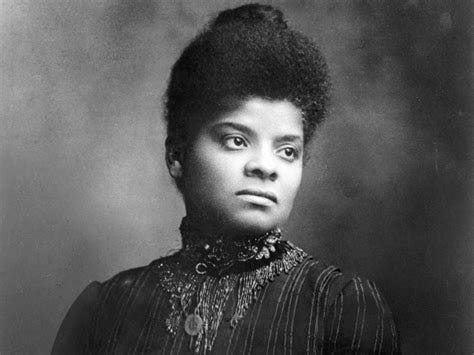
What Wells and the abolitionists share, separated by half a century, is the understanding that the story is not decoration applied to politics. The story is the precondition that makes the politics possible.
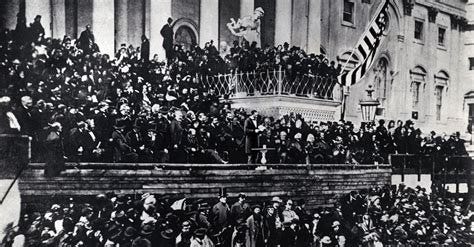
Lincoln’s second inaugural address did not announce policy. It performed a theological and narrative act that legislation could not. It placed four years of catastrophic violence inside a framework of shared moral reckoning, of a nation being held accountable by history for what it had chosen. It did not offer comfort. It offered meaning. And meaning, in a moment of collective trauma, is a form of orientation that no policy document can provide.
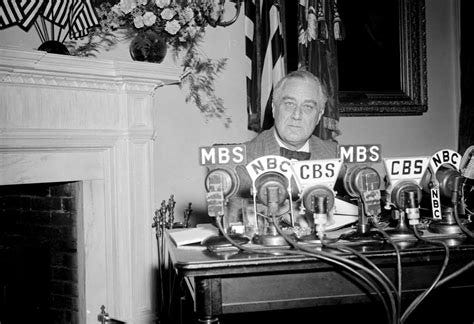
FDR’s fireside chats are remembered as a communications strategy. They were something more specific. They were relational repair between citizens and the federal government that had catastrophically failed them. The Great Depression was not merely an economic event. It was a legitimacy crisis. People had built their lives on assumptions about how the system worked and what it owed them. Those assumptions had collapsed. What the fireside chats did, at their best, was not explain policy. They narrated the country back into a shared story at a moment when that story had shattered. They spoke to people as participants in something larger rather than as recipients of something. That distinction, between citizens addressed as agents and citizens addressed as subjects, is the difference between storytelling that aggregates and storytelling that manages.
Frederick Douglass spent decades building a counter-narrative to the mythology of the Confederacy and the Lost Cause before Reconstruction made that counter-narrative politically legible. The story was not waiting for the politics. His story was preparing the ground for the politics. By the time the legal and legislative architecture of Reconstruction was being assembled, there was already a narrative infrastructure capable of giving it meaning and providing a buffer against the stories that would attempt to dismantle it.
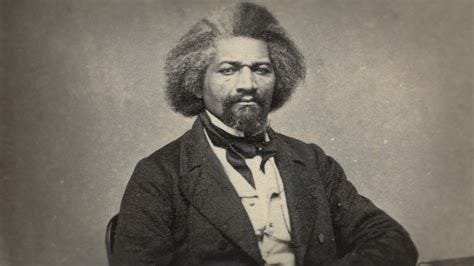
The dismantling happened anyway. Which is its own lesson about the limits of narrative without durable institutional support. But the Reconstruction moment itself, brief and incomplete as it was, required decades of narrative work that preceded it. The story came first. Politics were built on what the story revealed.
The most instructive recent examples of how this works, and how it fails, are also the most politically exposed. Which is precisely why they’re worth examining carefully, not as partisan argument but as structural case studies in what aggregating and fragmenting narrative look like in practice, and what each does to the people inside it.
Barack Obama’s 2004 Democratic National Convention keynote was a narrative act. What it attempted, with unusual deliberateness, was the construction of a ‘we’ capacious enough to hold people across profound difference. The formulation about there being no liberal America and no conservative America was not naive centrism. It was a specific narrative move, an attempt to build a shared story at a moment when the stories were already fragmenting.
Obama’s keynote drew on what psychologist Dan McAdams at Northwestern University, who has spent decades studying narrative identity and authored The Redemptive Self: Stories Americans Live By, calls the redemptive arc. The narrative structure through which suffering produces growth, struggle generates meaning, and the present difficulty is not the end of the story. McAdams’s research suggests this particular narrative architecture has unusual resonance in American culture, that it is woven into the country’s autobiographical tradition from its earliest expressions. Obama understood it and used it with abnormal skill.
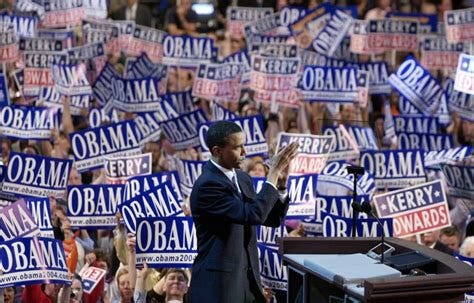
What that narrative did, at its best, was produce what psychologists call internal locus of control. A felt sense that collective action was meaningful and that ordinary people were agents in a real story rather than spectators of one. That is not a small thing. It is the psychological precondition for sustained civic engagement.
The Obama example contains a complication the series would be dishonest to omit. Narrative gift, deployed at sufficient scale and intensity, can produce unintended demobilization. The story can feel so complete, the arc so clearly bent, that the slower and less satisfying work of building durable political infrastructure feels less urgent. Political scientist Corey Robin has argued that Obama’s presidency produced exactly this effect in significant portions of his coalition. People felt the story had been won. By 2010, much of the energy that had produced the 2008 election had dissolved back into private life. The story outran the work. And when the story no longer had a narrator in the Oval Office, a power vacuum was born.
This is the timing problem the series has been circling. The story must follow the work. When it precedes or substitutes for the work, even the most powerful narrative can leave the infrastructure weaker than it found it.
Donald Trump’s storytelling operates by a structurally different mechanism. What Ruth Ben-Ghiat, Professor of History and Italian Studies at New York University, identifies in her comparative study of authoritarian leaders across a century of strongman rule, is not narrative in the aggregating sense. It is the deliberate production of disorientation. Her research documents that contradiction deployed as a tactic, and an information environment made sufficiently chaotic that people stop asking what is true and start asking who will protect them, are consistent features of authoritarian communication across regimes and eras.
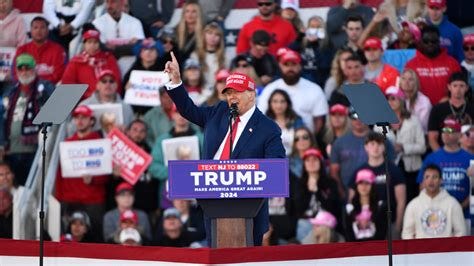
This maps precisely onto the nervous system argument the series established early. A dysregulated system reaches for certainty and a perceived strong container. The storytelling offers exactly that, a clear account of who the enemy is, what has been stolen, and who alone can recover it. The story is factually unreliable in most of its particulars. But it is emotionally coherent in a specific sense. It names a real experience of loss, displacement, and institutional betrayal and gives it a villain and a champion. That is a form of orientation, however destructive its consequences.
What Ben-Ghiat’s comparative research and Richardson’s historical argument both point toward is that this kind of storytelling accelerates the dysregulation it claims to resolve. The clarity it offers is purchased by narrowing. A nervous system organized around threat cannot easily expand back into the complexity that democratic life requires. The story produces people waiting to be led or saved, where the democratic project needs people capable of leading and building themselves.
The structural contrast between these two modes of narrative is not a partisan observation. It is a description of what different kinds of storytelling do to the interior conditions the series has been arguing are the precondition for everything else. One expands the listener’s sense of agency. The other contracts it. In a moment when those interior conditions are already under sustained pressure, that difference is not incidental. It is the whole question.
There is something worth adding here from direct observation rather than research.
After Katrina, when the official narrative had collapsed completely, when the statements made by authorities bore no legible relationship to what people on the ground were experiencing, the only orientation available came from people telling true stories about what was actually happening. True stories about who was where and what they needed and what was actually possible. Those stories did something the official narrative could not. They told people where they stood. They made the situation legible enough to act inside of rather than simply endure.
The people telling those stories were performing a specific cognitive and relational function. They were building the coordinates that allowed people to locate themselves inside a situation that had become otherwise incomprehensible. That function, in the absence of reliable institutional narrative, became the thing that made collective action possible.
Richardson’s historical argument and that direct experience point toward the same conclusion. Storytelling is not the decoration applied to political reality. In moments of genuine rupture, it is the infrastructure that makes navigating political reality possible.
What this means for the present moment requires honesty about what it doesn’t mean.
It does not mean that better storytelling will resolve the structural problems this series has been describing. The replacement mechanism is compromised in ways that narrative alone cannot address. The interior conditions required for sustained collective action have been degraded by forces that a good speech or a compelling essay cannot reverse. The phase transition, if it comes, will require the slow, locally rooted work of building genuine trust and relational infrastructure that the series has been arguing is the actual precondition for everything else.
What storytelling can do, and what the historical record suggests it has always done in renewal moments, is make that invisible work visible. The civil rights movement’s storytellers were not generating the organizing. The organizing had been happening for decades in church networks, legal campaigns, and civic organizations that most of the country never noticed. The storytellers named what the work already was. They made the accumulated invisible labor of thousands of ordinary people legible as a movement. They built the narrative coordinates that allowed people doing isolated acts of integrity and mutual care to recognize themselves as part of something larger.
Think what that makes possible.
That is the non-substitutable function that storytellers perform in moments like this one. The building of a ‘we’ encompassing enough to hold the people who are already doing the work, legible enough that they can find each other across the distance the attention economy has placed between them, and steadfast enough to hold under the pressure that comes when whatever is being built becomes visible enough to be contested as it surely will.
The timing still matters. The story still has to follow the work. But somewhere, in the slow, often profoundly boring, and largely invisible labor of building genuine trust, the work that will eventually need a story is already happening.
The question is whether the storytellers will be ready when the moment requires them.