The Node Problem
On Subcultures, Trust, and the Infrastructure Renewal Requires

There is a difference between influence and trust. They feel similar from the outside. They are not the same thing and they do not travel by the same mechanism.
Influence scales. A compelling idea, a charismatic voice, a piece of content that captures something true about the present moment, can reach millions of people in hours. The attention economy is extraordinarily good at this. It has made influence cheaper and more abundant than at any point in human history.
Trust does not scale the same way. Trust is built in small, repeated, costly interactions over time. It develops through demonstrated reliability under conditions where reliability was not guaranteed. It requires the accumulated weight of showing up when showing up was inconvenient, of telling the truth when a comfortable version was available, of staying present when detaching would have been easier. That process cannot be accelerated. It cannot be broadcast. It cannot go viral.
This distinction matters because the series has been building toward a question it hasn’t yet answered directly. The Interior Condition ended on the problem of aggregation. How do people who have done the interior work find each other. How do small nodes of genuine trust begin to organize into something load-bearing. The answer is not through influence, although that helps. It is through the slow, largely invisible process of trust traveling from person to person through specific relationships in specific places over time.
That process has a name. And it has a structure. And understanding both alters what seems worth doing right now.
Communities that prove load-bearing under pressure share a consistent structure regardless of their surface differences. Mutual aid networks were developed in LGBTQ communities during the AIDS crisis when official institutions largely abandoned people who were dying. Church networks and civic organizations of the civil rights movement. Union halls of the labor movement. The spiritual and lifestyle communities, the men’s work traditions, the women’s circles, the kink communities with their rigorous cultures of explicit consent and genuine accountability, that exist largely outside mainstream visibility today.
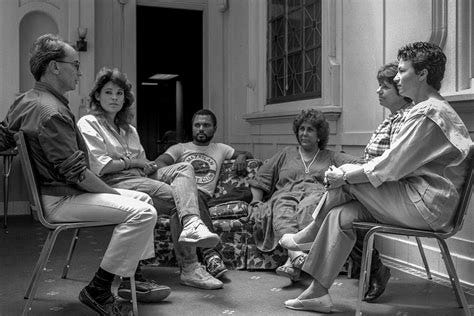
None of these looked, from the outside, like the kinds of communities that would prove politically or civically significant. Which is precisely why they had the protected development time to build something genuinely load-bearing. They built genuine internal architecture for reasons that had nothing to do with political significance, and discovered under pressure that the same properties that made them internally coherent made them capable of bearing weight when official structures could not.
The subculture is the incubation space. That is not incidental to how renewal works. It is one of the underlying mechanism.
This pattern is consistent across every renewal moment the series has examined.
Early Christian communities which eventually became the institutional Church were a subculture first. They built theology, governance, and genuine mutual accountability in relative obscurity over roughly three centuries before becoming politically legible. The labor movement’s union halls were subcultures. Communities with shared language, practiced trust, and genuine mutual accountability that existed long before they became a political force. The civil rights movement’s Black churches were subcultures. Communities that had been developing the specific interior and relational capacities that collective action requires for generations before the period most people recognize as the movement.
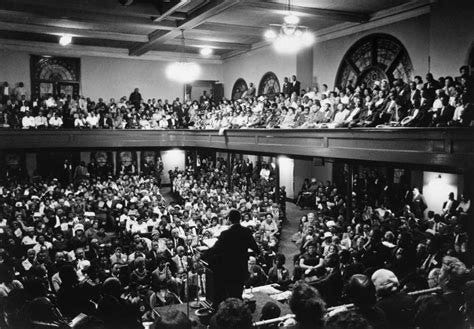
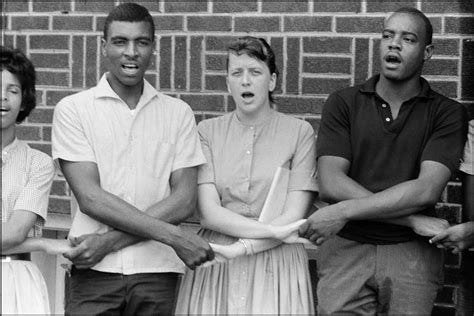
Aldon Morris, the sociologist at Northwestern University whose research on the origins of the civil rights movement remains the foundational account of how trust actually aggregated into collective action, identified what he called local movement centers. Dense nodes of relationship, usually anchored by institutions like churches or civic organizations, where trust had been built slowly enough to be genuine and leveraged collectively when the moment required it. The Student Nonviolent Coordinating Committee’s organizing model depended on field secretaries spending months in a single community before anything resembling collective action was attempted. Organizing preceded the movement by years. The subculture preceded the organizing by generations.
Robert Putnam, the political scientist at Harvard whose research on social capital has shaped how scholars understand civic life for decades, draws a distinction that is useful here. Bonding capital is trust within groups. Bridging capital is trust across groups. Both matter. They serve different functions and they are built through different processes.
What this series has been describing as interior coherence, the alignment of values and actions sustained through specific practices over time, creates the conditions for bonding capital. The deep trust within a community that comes from genuine mutual accountability and demonstrated reliability. What the LGBTQ mutual aid networks built during the AIDS crisis. What the women’s circles built through decades of consciousness-raising and genuine relational accountability. What men’s work traditions and spiritual communities and kink communities are building now. Bonding capital. The kind of trust that makes a community functional when official systems fail.

Load-bearing institutions require bridging. The civil rights movement had bonding capital in abundance, built through decades of church networks and civic organizations. What allowed it to become a national political force was bridging. The ability to build trust across communities that didn’t share the same demographics, the same theology, the same geography, the same history. That bridging didn’t happen automatically. It required specific people doing specific work over long periods of time.
The distinction between communities that build genuine bonding capital and communities that merely perform it is worth sitting with, because the current environment makes performance more convincing than it has ever been.
UNcivilized, the men’s work community built around the premise that genuine masculine development requires confronting rather than performing, building genuine relational accountability rather than performing brotherhood, represents one of the more serious attempts currently underway to build the specific interior and relational capacities this series has been arguing matter. The men who come through that work and stay with it are not building a political movement. They are building the human precondition for one.
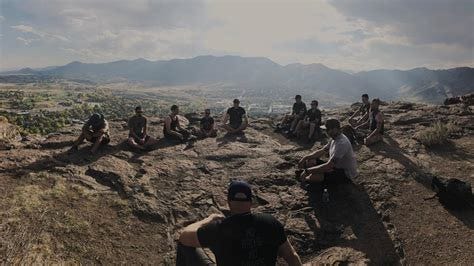
The contrast between this kind of genuine men’s work and the manosphere is precisely the differentiation this series has been making throughout. One builds interior coherence and directs it toward genuine service and connection. The other builds performed certainty and directs it toward resentment and hierarchy. One produces people who can be load-bearing under pressure. The other produces people who feel load-bearing until pressure actually arrives.
That distinction matters here because the gender gap in how young men and young women are currently orienting politically is one of the clearest signals available of the node problem in its current form.
Pippa Norris, the political scientist at Harvard whose comparative research on value change across democracies is among the most comprehensive available, documents a divergence between young men and young women that is larger than anything in postwar data. Young women are moving toward progressive political orientations at rates that track fairly consistently with longer historical patterns. Young men are moving toward authoritarian narratives at rates that are historically unprecedented.
Young men are being pulled toward communities that name real pain and route it through resentment. The pain is real. The displacement, the loss, the sense of institutional betrayal, these are not invented grievances. But the communities filling that vacuum build bonding capital around shared anger rather than shared practice. They produce people who feel load-bearing until pressure actually arrives.
A series arguing that genuine renewal requires building trust across difference has to reckon with that directly. The nodes forming among young men in these communities are not building the interior coherence the series has been describing. They are building a convincing substitute for it. And the difference between the two, which are invisible in low-stakes environments, is the whole question when the stakes become real.
This is the node problem at its most specific. The question is not only whether genuine trust is being built somewhere. It is whether the nodes of genuine trust that are forming can eventually bridge across the demographic and ideological distances that load-bearing institutions require. Bonding capital within communities that already share values is easier to build. Bridging capital across communities that don’t is harder and rarer and more important. And bridging is what the present moment most urgently needs.
Political scientist Sidney Tarrow at Cornell, whose comparative research on social movements examines the conditions under which they develop durable organizational infrastructure, has identified a consistent pattern in movements that sustain themselves through periods of low visibility. They tend to develop three things that the attention economy specifically degrades. Internal accountability structures that function without public pressure. The capacity to absorb failure without fragmenting. And leadership development that happens slowly enough to be genuine rather than performed.
The historical record of renewal moments consistently shows a small number of non-substitutable roles that make bridging possible once bonding capital exists. Understanding these roles is useful as a way of recognizing work that is already happening and that matters more than it currently appears to.
Connectors are people whose primary function is building lateral relationships between nodes of genuine trust. They make introductions. They hold relationships with people in multiple communities simultaneously. They recognize when two nodes that don’t know each other share enough structural similarity to build something together. They are not the most visible people in any room. They are often not visible at all from the outside. But without them the nodes remain isolated and the bonding capital never becomes bridging capital.
Translators are people who can move between different communities and render each legible to the other without flattening the differences. They don’t erase what makes each community distinct. They find the structural similarities underneath the surface differences and make those similarities available for people who wouldn’t otherwise find them. The civil rights movement had translators who could move between Black church communities and white liberal institutions and labor unions, making each comprehensible to the others without pretending they were the same. That work was unglamorous and largely invisible and absolutely essential.
Indigenous leaders are people whose legitimacy comes entirely from within a specific community rather than from external credentialing or mainstream visibility. Their authority is not transferable. It doesn’t travel to other communities and it doesn’t scale. But within the community where it was built it is more durable and more load-bearing than any externally conferred authority because it was earned through the accumulated weight of demonstrated reliability over time. They function as the voice and heart of the community which allow the connectors and translators to do their work.
These roles don’t require exceptional people. They require people who have done the interior work this series has been describing and who have chosen to direct that work outward rather than inward. The distinction is not between gifted and ordinary. It is between people who have developed genuine interior coherence and are using it to build something and people who have developed genuine interior coherence and are using it primarily to maintain their own stability.
Both are understandable. Only one is load-bearing at the collective level.
One more thing worth naming. People rarely discover which role they are through self-assessment or external designation. They discover it the same way they developed the interior coherence the role requires. By paying attention to where their presence creates something real rather than just fills space, and following that signal without needing it confirmed by an audience. The role finds the person who has already been doing the work. It doesn’t arrive before the work begins.
There is a tension worth naming before closing.
The series has been careful throughout about the dangers of premature visibility. When Replacement Fails made the structural argument that the incubation space, the protected development time that allows something new to build genuine internal coherence before facing full public exposure, has been colonized by the attention economy. The Interior Condition made the parallel argument at the human level. Genuine interior development requires the absence of an audience.
Describing the node structure clearly creates a version of the visibility problem. Naming the communities that are doing this work risks exactly the kind of attention economy processing that the series has argued is fatal to genuine development.
There is no clean resolution to that tension. But there is a nuance worth holding. The visibility that destroys is the visibility of the attention economy. The amplification that pulls nascent communities into the cycle of overexposure, demand for policy specifics before internal coherence has developed, backlash organized with professional efficiency, and exhaustion before maturation.
The visibility of recognition within a network of people doing similar work is different. It is closer to what the storytelling piece described as orientation. Making the invisible work legible to the people doing it. Allowing people doing isolated acts of genuine trust-building to recognize themselves as part of something larger without exposing what they’re building to the forces that process movements before they can become load-bearing.
The node problem is not solved by naming it. Yet, naming it precisely is one of the things the storyteller is for.